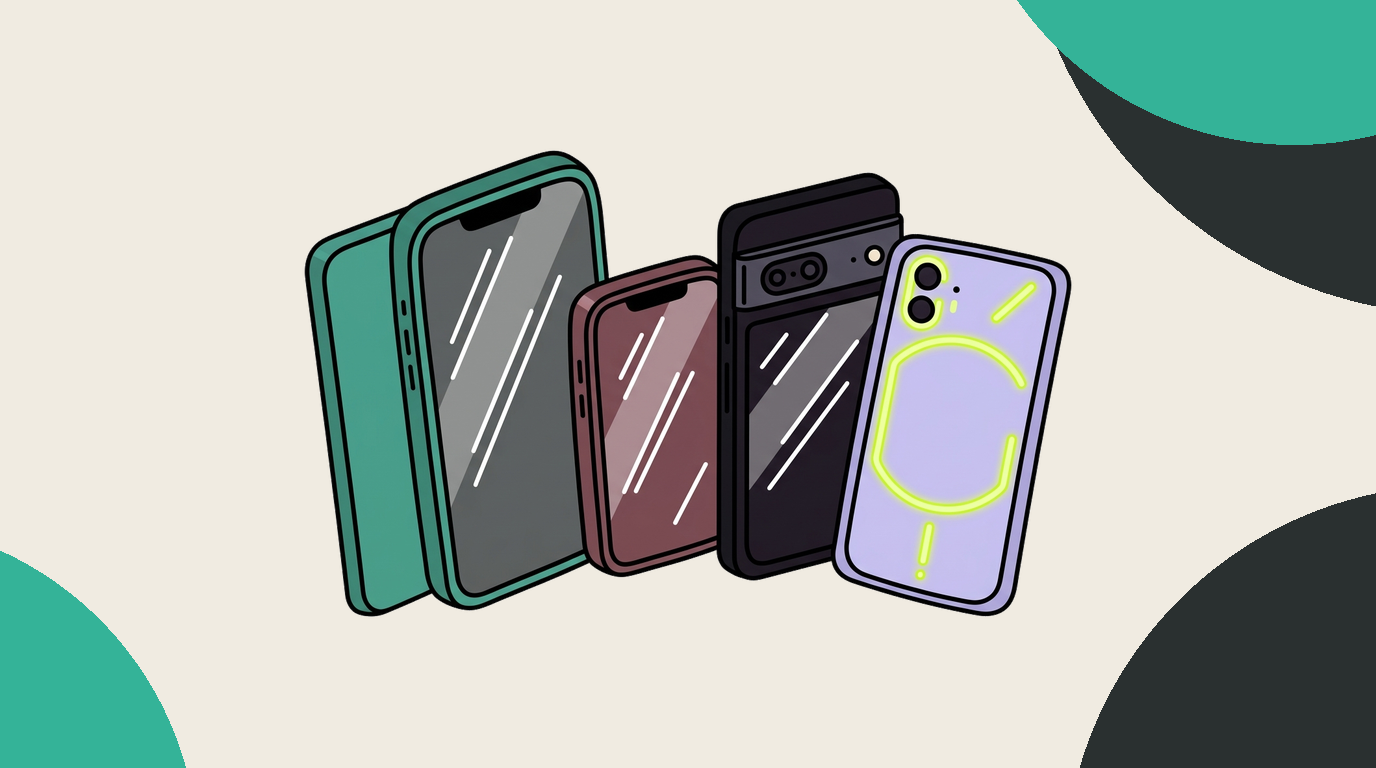

TL;DR: The first quarter of 2026 delivered four standout smartphones across every price tier. Samsung's Galaxy S26 Ultra leads on raw specs with a 200MP camera and Snapdragon 8 Elite Gen 5, while Apple's iPhone 17e brings flagship-grade silicon to $599. Google's Pixel 10a offers the best value at $499 with 7 years of updates, and Nothing Phone (4a) undercuts them all at $349 with unique hardware design.
TL;DR: The first quarter of 2026 delivered four standout smartphones across every price tier. Samsung's Galaxy S26 Ultra leads on raw specs with a 200MP camera and Snapdragon 8 Elite Gen 5, while Apple's iPhone 17e brings flagship-grade silicon to $599. Google's Pixel 10a offers the best value at $499 with 7 years of updates, and Nothing Phone (4a) undercuts them all at $349 with unique hardware design.
By MobileAPI Team | Last updated: March 2026
Table of Contents
- Why Q1 2026 Matters for Mobile Development
- Samsung Galaxy S26 Ultra
- Apple iPhone 17e
- Google Pixel 10a
- Nothing Phone (4a)
- Head-to-Head Comparison Table
- What This Means for Developers
- FAQ
- Key Takeaways
Why Q1 2026 Matters for Mobile Development
The first three months of 2026 reshaped the smartphone landscape in ways that matter well beyond consumer purchasing decisions. Four major releases landed within a single week in March, each targeting a different segment of the market and each introducing hardware changes that developers and platform builders need to understand.
For teams building e-commerce platforms, comparison sites, trade-in services, or mobile-first applications, these launches created an immediate need for accurate, structured device data. The spec differences between these phones affect everything from responsive design breakpoints to camera capability detection to battery optimization strategies.
This roundup breaks down each device on its technical merits, compares them side by side, and explains why having programmatic access to this data through an API like MobileAPI.dev is becoming essential infrastructure for any business that touches mobile hardware.
Samsung Galaxy S26 Ultra
Released: March 11, 2026 | Starting price: $1,299
Samsung's flagship arrived with a clear message: no compromises. The Galaxy S26 Ultra is the most spec-heavy smartphone on the market in Q1 2026, and it pushes the boundaries in camera hardware, processing power, and a new privacy-focused feature that has enterprise buyers paying attention.
Display and Design
The 6.9-inch Dynamic AMOLED 2X panel delivers QHD+ resolution at 120Hz with LTPO adaptive refresh. This is an incremental improvement over the S25 Ultra, but the real story is the new Privacy Display. A hardware toggle lets users activate a mode that restricts viewing angles, making the screen unreadable from the side. This is not a software filter. It is a physical layer built into the display stack.
For developers building enterprise or financial applications, this feature introduces a new hardware capability to detect and respond to programmatically.
Performance
The Snapdragon 8 Elite Gen 5 paired with 16GB of RAM makes this the most powerful Android phone available. Storage options extend to 1TB, positioning the S26 Ultra as a viable content creation workstation. Benchmark results place it ahead of every competing Android chipset by a meaningful margin.
Camera System
The 200MP main sensor with an F1.4 aperture is the headline specification. That aperture is the widest ever shipped on a smartphone main camera, allowing significantly more light capture in low-light conditions. For platforms that process or display user-uploaded photos, the file sizes and resolution from this sensor will be notably larger than previous generations.
Battery and Charging
A 5,000mAh cell with 60W wired charging and 25W wireless charging. These are solid numbers, though not class-leading for charging speed. Samsung has prioritized battery longevity over raw wattage.
Available colors: Black, Cobalt Violet, Sky Blue, White.
Apple iPhone 17e
Released: March 11, 2026 | Starting price: $599 (256GB)
Apple retired the "SE" branding and replaced it with the iPhone 17e, a phone that sits in the mid-range on price but borrows heavily from the flagship parts bin. At $599, it is the most affordable way into Apple's current-generation ecosystem, and the spec sheet explains why it is generating significant attention.
Display and Design
The 6.1-inch Super Retina OLED XDR display is a major upgrade from the LCD panels used in previous budget iPhones. This is a genuine OLED screen with the same display technology found in the iPhone 16 Pro. For developers, this means consistent color rendering and HDR support across a much larger percentage of the active iPhone install base.
The body features Ceramic Shield 2, which Apple claims delivers 3x the scratch resistance of standard glass. This is relevant for trade-in and resale platforms that grade device condition, as screens should maintain their quality longer.
Performance
The A19 chip keeps Apple's tradition of putting current-generation silicon in every price tier. More significant for developers is the C1X modem, Apple's second-generation custom cellular modem. Apple states it delivers 2x faster connectivity than its predecessor. This is Apple continuing to vertically integrate its hardware stack, reducing dependence on Qualcomm.
Camera
A single 48MP Fusion camera with 4K Dolby Vision video recording. While it lacks the multi-lens systems of the Pro models, the computational photography pipeline means this camera outperforms many competing phones at twice the price. The Fusion sensor combines data from multiple photosite sizes to optimize for different lighting conditions in a single shot.
Battery
Apple rates the iPhone 17e at up to 26 hours of battery life. As always, Apple does not disclose battery capacity in mAh, but real-world testing from early reviews confirms all-day endurance with moderate to heavy use.
Available colors: Black, White, Soft Pink.
Google Pixel 10a
Released: March 5, 2026 | Starting price: $499 (128GB) / $599 (256GB)
Google's "a" series has consistently delivered the best camera-per-dollar ratio in the smartphone market, and the Pixel 10a continues that tradition. But the real selling point for developers and businesses is the software commitment: 7 years of OS and security updates, guaranteed through 2033.
Display
The 6.3-inch OLED panel runs at 120Hz and peaks at 3,000 nits, which is 11% brighter than the Pixel 9a. High peak brightness matters for outdoor readability, a consideration for any app designed for field workers, delivery drivers, or outdoor retail.
Performance
The Tensor G4 chip is built around Google's AI-first philosophy. Gemini AI is deeply integrated at the system level, powering features like real-time translation, call screening, and on-device summarization. For developers building AI-powered applications, the Tensor G4 provides on-device inference capabilities that reduce the need for cloud API calls.
Camera
A dual-camera system with a 48MP main sensor and 13MP ultrawide lens. The headline software feature is Auto Best Take, which uses AI to automatically select the best frame from a burst of shots, optimizing for sharpness, expression, and composition. Google's computational photography continues to punch well above its hardware weight class.
Battery and Charging
The 5,100mAh battery is the largest in this comparison. Combined with 30W wired and 10W wireless charging, the Pixel 10a is built for endurance. The large battery also supports reverse wireless charging for accessories.
Software Updates
Seven years of guaranteed updates is the longest commitment from any manufacturer at this price point. For enterprise deployments and fleet management, this dramatically extends the useful life of the device and reduces total cost of ownership.
Available colors: Berry, Lavender, Fog, Obsidian.
Nothing Phone (4a)
Released: March 13, 2026 | Starting price: 349 GBP (standard) / $499 (Pro)
Nothing continues to be the most interesting disruptor in the smartphone market. The Phone (4a) delivers mid-range specs at a budget price, but the real differentiator remains the Glyph Interface, a design element that no other manufacturer has replicated.
Display
The standard model features a 6.78-inch 120Hz AMOLED display. The Pro variant steps up to 6.83 inches and 144Hz, one of the few phones on the market to exceed the 120Hz standard. For gaming and high-frame-rate content, the Pro model offers a tangible smoothness advantage.
Performance
The standard Phone (4a) runs the Snapdragon 7s Gen 4, while the Pro model upgrades to the Snapdragon 7 Gen 4. Both are capable mid-range chipsets that handle daily tasks and moderate gaming without issue. Neither will match the Galaxy S26 Ultra in raw benchmarks, but that is not the target market.
Camera
A dual 50MP system with a main sensor and a 3.5x telephoto lens. The inclusion of a dedicated telephoto at this price point is unusual and welcome. Most phones under $500 pair a main camera with an ultrawide, so Nothing's choice to prioritize zoom capability sets it apart.
Battery and Charging
A 5,080mAh battery with 50W wired charging. The charging speed is the fastest in this roundup for the standard model category, and the battery capacity is competitive with the Pixel 10a.
The Glyph Interface
The signature rear LED array features 63 mini-LEDs arranged in Nothing's distinctive pattern. The Glyph Bar serves as a notification system, progress indicator, and fill light for photography. Nothing OS 4.1, built on Android 16, provides deep customization options for the LED patterns.
Available colors: Varies by region and model variant.
Head-to-Head Comparison Table
| Specification | Samsung Galaxy S26 Ultra | Apple iPhone 17e | Google Pixel 10a | Nothing Phone (4a) |
|---|---|---|---|---|
| Price | $1,299 | $599 | $499 | From 349 GBP / $499 (Pro) |
| Release Date | March 11, 2026 | March 11, 2026 | March 5, 2026 | March 13, 2026 |
| Display | 6.9" AMOLED, QHD+, 120Hz LTPO | 6.1" OLED XDR | 6.3" OLED, 120Hz, 3000 nits | 6.78" AMOLED, 120Hz (Pro: 6.83", 144Hz) |
| Processor | Snapdragon 8 Elite Gen 5 | A19 | Tensor G4 | Snapdragon 7s Gen 4 (Pro: 7 Gen 4) |
| RAM | 16GB | Not disclosed | Not disclosed | Varies by model |
| Storage | Up to 1TB | 256GB | 128GB / 256GB | Varies by model |
| Main Camera | 200MP, F1.4 | 48MP Fusion | 48MP + 13MP ultrawide | 50MP + 50MP 3.5x telephoto |
| Battery | 5,000mAh | Up to 26hr (rated) | 5,100mAh | 5,080mAh |
| Charging (Wired) | 60W | Not disclosed | 30W | 50W |
| Charging (Wireless) | 25W | MagSafe | 10W | Not specified |
| Notable Feature | Privacy Display (hardware) | C1X custom modem | 7 years of updates | 63-LED Glyph Bar |
| Colors | Black, Cobalt Violet, Sky Blue, White | Black, White, Soft Pink | Berry, Lavender, Fog, Obsidian | Varies by region |
Need this data in JSON format for your application? The MobileAPI.dev API provides structured specs for all four of these devices and over 27,800 others, accessible via simple REST endpoints.
What This Means for Developers
Q1 2026 introduced several hardware trends that developers and platform builders should plan for.
Display fragmentation continues. Screen sizes in this roundup range from 6.1 to 6.9 inches, with refresh rates spanning 60Hz to 144Hz. Responsive design is no longer just about width breakpoints. Frame rate detection and adaptive rendering are becoming baseline requirements.
Camera resolution is diverging. The gap between 48MP and 200MP across these four devices means that image upload pipelines need to handle dramatically different file sizes and resolutions. A single photo from the S26 Ultra can be 5-10x larger than one from the Pixel 10a.
Software update timelines vary. Google's 7-year commitment versus the industry-standard 3-4 years affects how long a device should be considered "supported" in your platform. For trade-in valuations and compatibility matrices, this data point is increasingly important.
New hardware capabilities need detection. Samsung's Privacy Display introduces a feature that apps may need to detect and respond to. Nothing's Glyph Interface creates notification possibilities unique to a single manufacturer. These are the kinds of device-specific capabilities that a structured specs database makes discoverable.
For any of these use cases, querying individual manufacturer sites or scraping spec sheets is unsustainable at scale. A purpose-built API like MobileAPI.dev lets you pull structured specification data for any device with a single HTTP request, whether you are building a comparison tool, populating a product catalog, or training a pricing model.
FAQ
Which Q1 2026 phone has the best camera?
The Samsung Galaxy S26 Ultra leads on hardware specifications with its 200MP main sensor and F1.4 aperture, the widest ever on a smartphone. However, Google's Pixel 10a consistently outperforms its spec sheet through computational photography. For pure image quality per dollar spent, the Pixel 10a at $499 delivers results that rival phones costing twice as much.
What is the best budget smartphone released in early 2026?
The Google Pixel 10a at $499 offers the strongest overall value with its 120Hz OLED display, 5,100mAh battery, and 7 years of guaranteed software updates. The Nothing Phone (4a) at 349 GBP undercuts it on price and adds a unique telephoto camera, making it the better choice for buyers who prioritize zoom photography and distinctive design over long-term software support.
Is the iPhone 17e worth buying over the Pixel 10a?
The iPhone 17e at $599 makes sense for users already invested in the Apple ecosystem. Its A19 chip matches flagship performance, the OLED display is a major upgrade from previous budget iPhones, and 256GB of base storage exceeds the Pixel 10a's 128GB entry point. The Pixel 10a counters with a larger battery, faster charging, a secondary camera, and a $100 lower starting price.
How do I access smartphone specs programmatically for my app?
MobileAPI.dev provides a REST API with structured specification data for over 27,805 devices. You can query endpoints like /devices/search/ to find any device by name, then retrieve detailed specs including display, camera, battery, and connectivity data in JSON format. A free tier with 200 requests per month is available at mobileapi.dev/signup.
What new hardware features should developers plan for in 2026?
Three features from Q1 2026 launches deserve developer attention: Samsung's hardware Privacy Display toggle, which may require apps to adapt their UI; Apple's C1X custom modem, which changes cellular performance characteristics; and Google's deeper Gemini AI integration at the OS level, enabling on-device inference without cloud API calls. Tracking these capabilities across devices is where a structured specs API becomes valuable.
Key Takeaways
-
The mid-range is the new battleground. Three of the four major Q1 2026 launches are priced under $600. The gap between mid-range and flagship performance is narrowing faster than pricing suggests, which affects how comparison platforms and trade-in services should model device value.
-
Camera specs alone do not tell the full story. The Galaxy S26 Ultra's 200MP sensor and the Pixel 10a's 48MP sensor produce surprisingly comparable results in real-world use, thanks to Google's computational photography. Developers building image-processing pipelines should test against actual output, not just megapixel counts.
-
Software support is becoming a key differentiator. Google's 7-year update commitment for a $499 phone sets a new standard that pressures every other manufacturer. For enterprise fleet management and device lifecycle planning, this data point is as important as any hardware specification.
-
Hardware fragmentation demands structured data. With display sizes from 6.1 to 6.9 inches, refresh rates from 60Hz to 144Hz, and unique features like Glyph LEDs and Privacy Displays, manually tracking device capabilities across even these four phones is impractical. At scale across 27,805+ devices, it requires an API.
-
Q1 2026 set the pace for the year. These four launches collectively define the benchmarks that every subsequent 2026 release will be measured against. The comparison data in this article is available programmatically through the MobileAPI.dev API for teams that need to integrate device specifications into their products.
Building a product that needs smartphone specifications? MobileAPI.dev provides structured device data for over 27,805 phones, tablets, laptops, and wearables from 200+ brands. Get started free with 200 API requests per month.